
· Stevanus Wijaya · Gamification Motivation · 9 min read
How to Use a Life Stats Dashboard to Actually Measure Your Life
What gets measured gets improved — but most people measure nothing about their actual life. Here is how a Life Stats Dashboard turns vague self-improvement into a real feedback system.
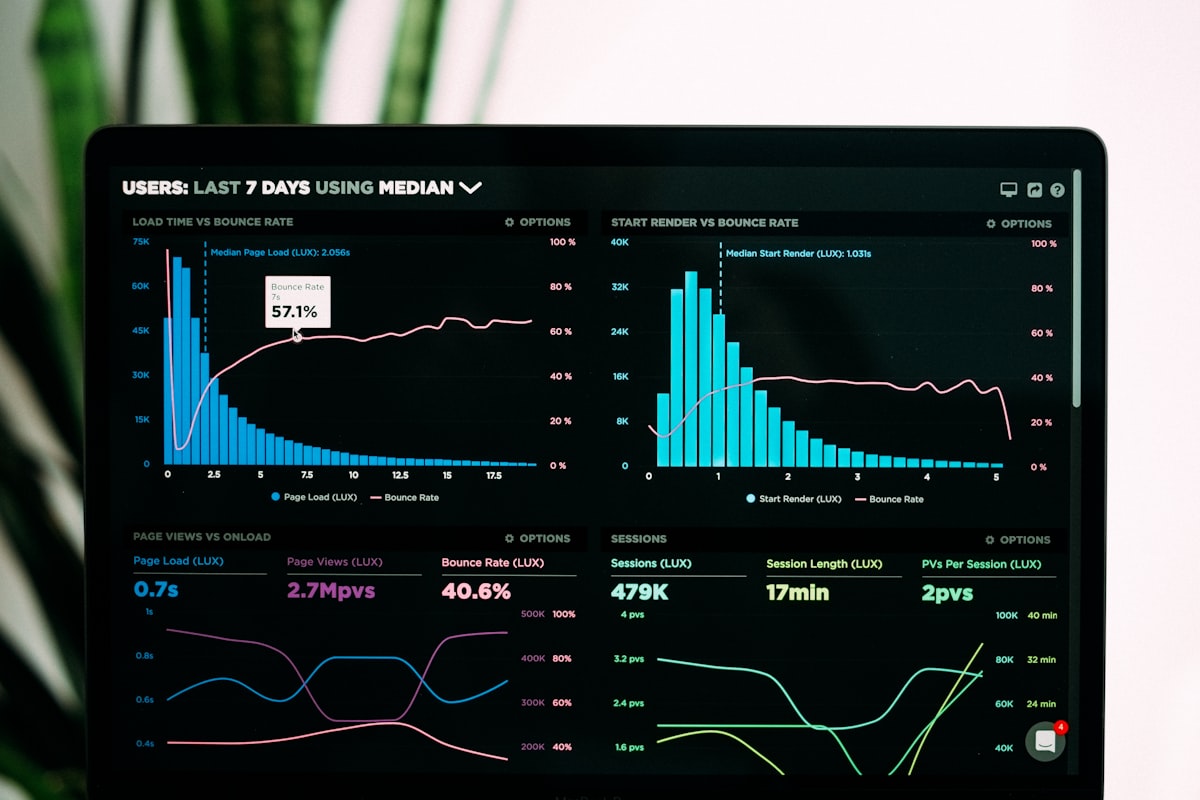
In an RPG, you always know exactly where you stand.
Strength: 42. Endurance: 31. Charisma: 18. Intelligence: 55. Every attribute is visible, measurable, and responds directly to your actions. You know which stats are high, which ones are holding you back, and exactly what you need to do to improve them.
Real life does not work like that — at least, not by default.
Most people have a vague sense of how they are doing across the major areas of their life. Roughly healthy. Probably not sleeping enough. Work is going okay. Relationships feel a bit neglected. But “roughly” and “probably” are not feedback systems. They are just feelings, and feelings are notoriously bad at tracking slow, gradual change.
A Life Stats Dashboard changes that. It gives your real life the same kind of visible, measurable feedback that RPGs give your character — so you can actually see where you are strong, where you are declining, and what deserves your attention this week.
Why Measuring Your Life Matters
There is a management principle often attributed to Peter Drucker: “What gets measured gets managed.” It is a cliché because it is true, and it applies well beyond business.
When you track something — sleep, exercise frequency, quality of relationships, creative output — three things happen that do not happen when you do not track it.
You notice patterns you would otherwise miss. The connection between poor sleep and low motivation is obvious in theory, but most people do not actually see it in their own life until they have data that shows it clearly. Tracking creates evidence.
You catch slow declines before they become crises. A gradual erosion of physical health, or increasing isolation from people you care about, is nearly invisible in the day-to-day. Measured weekly, it becomes visible early — when it is still easy to course-correct.
You get accurate feedback on whether your efforts are working. Self-improvement without measurement is essentially guesswork. You think you are getting better, but you are not sure. Tracking turns guesswork into a feedback loop.
The Life Stats Dashboard is designed to give you all three.
The Six Core Life Stats
The Life Stats Dashboard tracks six attributes — chosen because they cover the domains that most consistently determine how people feel about their lives, and because they are measurable without being obsessively quantified.
Vitality
Your physical foundation: energy levels, sleep quality, exercise frequency, nutrition. This is the stat that underlies everything else. When Vitality is low, every other stat suffers — focus drops, emotional resilience shrinks, motivation disappears.
Vitality is often the first stat to decline under stress and the last one people prioritize. Tracking it makes the trade-off visible.
Focus
Your cognitive capacity: ability to do deep work, resist distraction, maintain attention on what matters. In an environment designed to fragment attention, Focus is increasingly rare — and increasingly valuable.
Low Focus shows up as the feeling of being perpetually busy but never productive. High Focus is what separates people who make real progress from people who are always catching up.
Wealth
Not just money — financial health and relationship with resources. Income, savings, debt, financial stress, progress toward financial goals. Wealth tracked regularly removes the anxiety of the unknown and replaces it with a clear picture of where you actually stand.
Connection
The quality and depth of your relationships: time spent with people who matter, quality of those interactions, sense of being known and supported. Connection is consistently one of the strongest predictors of long-term wellbeing in the research literature — and one of the most commonly neglected stats when life gets busy.
Growth
Your trajectory of learning and development: new skills being built, knowledge being acquired, challenges being undertaken. Growth measures whether you are becoming someone different — and better — over time, or whether you are essentially the same person you were a year ago.
Meaning
Your sense of purpose and alignment: whether your daily life feels connected to something that matters to you, whether your work feels worthwhile, whether you are living in accordance with your values. Meaning is the hardest stat to measure precisely and the most important one to track.
How to Set Your Baselines
Before you can track improvement, you need an honest starting point.
Open the Life Stats Dashboard and rate each of the six stats on a scale of 1 to 10 — where 1 is “this area of my life is in serious trouble” and 10 is “this is genuinely excellent right now.”
A few guidelines for honest rating:
Rate your actual experience, not your potential. “I could be healthier” is not a rating. “How healthy am I, actually, right now?” is.
Use the full scale. Most people cluster their ratings in the 5–7 range because it feels safe. A real 3 should be rated 3. A real 9 should be rated 9. The dashboard is only useful if it reflects reality.
Rate independently. Do not let one area influence another. Your career going well does not mean your relationships are fine. Assess each stat on its own merits.
Your first set of ratings is your baseline. Every subsequent update is measured against it — so you can see, concretely, whether things are improving.
The Weekly Check-In
The most important habit in the Life Stats system is the weekly check-in — a 5-minute review where you update each stat and note what drove the change.
The weekly cadence is deliberate. Daily ratings are too noisy — a bad night’s sleep or a difficult conversation can distort a whole day’s numbers. Monthly ratings are too infrequent — a lot can change in four weeks, and you want to catch it. Weekly hits the sweet spot: long enough to smooth out noise, short enough to catch real trends.
During your weekly check-in, for each stat:
- Rate it honestly on the 1–10 scale
- Note one thing that contributed positively this week
- Note one thing that pulled it down
- Set one intention for next week
The intention piece is what connects the dashboard to actual behavior. Without it, you have data but no action. With it, each weekly review generates a short list of focused priorities for the coming week.
Reading Your Stats: What to Look For
Once you have a few weeks of data, patterns start to emerge. Here is how to read them.
The lowest stat deserves the most attention. In RPG terms, your weakest attribute limits your overall performance. A character with 90 in every stat but 12 in Vitality is going to struggle. In real life, a chronically low stat in one area tends to drag everything else down. Start with the floor, not the ceiling.
Declining trends matter more than single low scores. A 5 that has been 5 for months is different from a 7 that has dropped to 5 over three weeks. The trend is more informative than the snapshot. A declining trend is an early warning sign — something is being neglected or eroded.
Correlations between stats tell you something. If your Focus drops every time your Vitality drops, sleep and exercise are probably driving your cognitive performance. If your Meaning score dips whenever your Growth score dips, learning and development may be central to your sense of purpose. These correlations point toward the highest-leverage interventions.
Celebrate genuine improvement. When a stat moves from 4 to 6 over two months, that is real progress — even if 6 is not where you ultimately want to be. The dashboard should be a source of evidence for your progress, not just a list of things to fix.
The Quarterly Life Review
Every three months, spend 30 minutes with your full stat history.
The quarterly review asks bigger questions than the weekly check-in:
- Which stats have genuinely improved since the last quarter?
- Which ones have stayed flat despite your intentions?
- Is there a stat you have been consistently avoiding or underrating?
- What does the overall pattern tell you about your priorities — the ones you claim versus the ones you actually live?
That last question is often the most useful one. Most people say their family is their top priority. Many of those same people have a Connection stat that has been declining for six months while their Wealth stat climbs. The dashboard does not judge — it just shows you the gap between what you say matters and what your life actually reflects.
That gap, once visible, is hard to ignore.
Gamification and the Life Stats Dashboard
The reason for framing life attributes as “stats” is not just aesthetic. It is motivational engineering.
When you describe your sleep and energy as your Vitality stat, something subtle shifts. Instead of “I should be healthier” — a vague, guilt-laden obligation — it becomes “I want to level up my Vitality.” The same behavior is now a quest rather than a chore.
The gamification framing also makes improvement feel more concrete. Moving a stat from 5 to 7 is a meaningful event — you can see it, you can point to it, you can feel the progress. That visibility matters for sustaining motivation over the months and years that real self-improvement requires.
It also normalizes the idea that all stats matter — not just career or productivity, which tend to dominate conventional self-improvement culture. A high Wealth stat and a low Connection stat is not a successful life; it is an imbalanced character build. The dashboard makes that trade-off visible in a way that a resume never would.
Getting Started: Your First Week
Here is the simplest possible way to start:
Day 1: Open the Life Stats Dashboard and set your baselines. Rate all six stats honestly. Write one sentence about why each rating is what it is.
Day 7: Do your first weekly check-in. Update the ratings. Note what changed and why. Set one intention for each stat that is below a 6.
Day 30: Look at four weeks of data. What trends do you see? What is the lowest stat? What is one concrete change you could make to address it?
That is the whole system to start. You do not need to optimize it or make it complex. You need to use it consistently — and let the data tell you what to do next.
The goal is not a perfect 10 in every stat. The goal is an honest, accurate picture of your actual life — and a simple system for making it better, one week at a time.
The Life Stats Dashboard is free, no sign-up required, and your data stays in your browser. Pair it with the Quest Planner to turn your weekly stat intentions into actual quests — so the gap between “I should improve this” and “here is what I am doing about it this week” disappears.


