
· Stevanus Wijaya · Productivity Systems · 10 min read
Digital Minimalism: How to Reclaim Your Attention in a World Built to Distract You
Your phone is not a tool you use. It is a product designed to use you. Digital minimalism is the counter-strategy — intentional technology use that puts your goals back in charge of your attention.
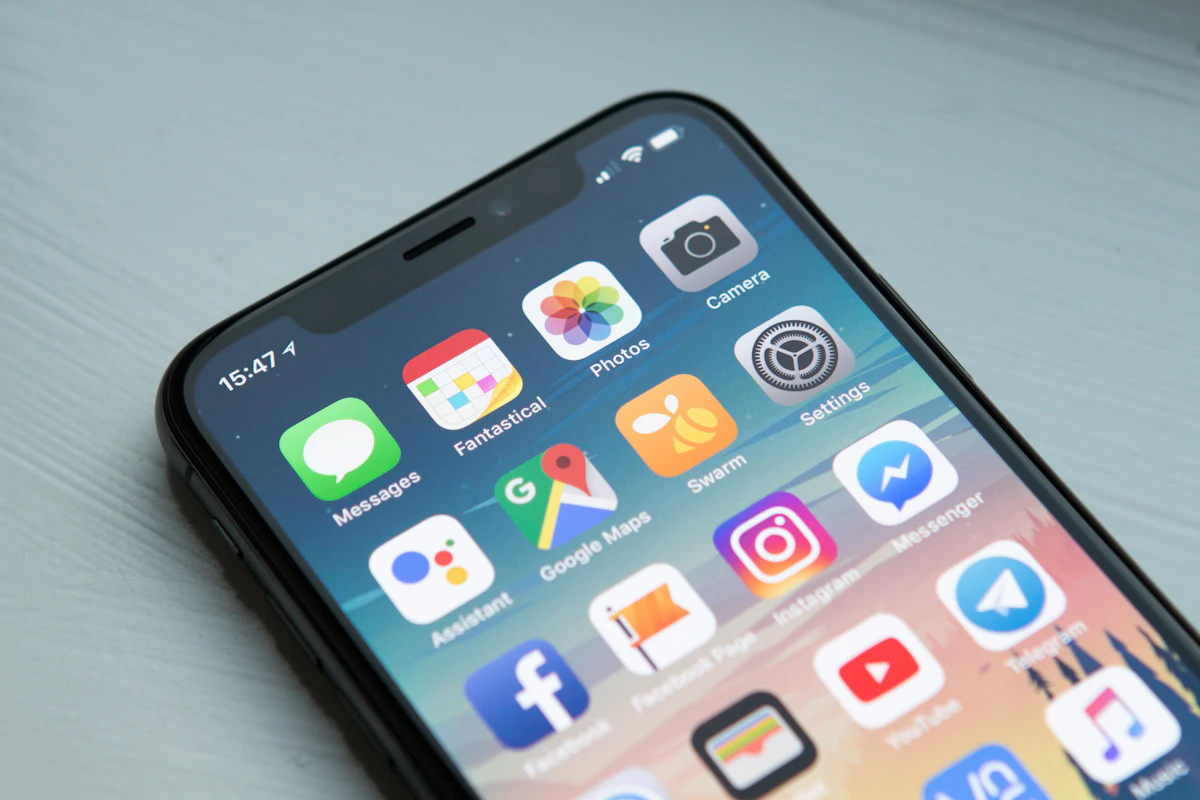
There is an industry employing thousands of engineers whose sole job is to maximize the time you spend looking at their products. They use psychological research, A/B testing on hundreds of millions of users, and techniques borrowed from gambling psychology to make their apps as compelling as possible.
You are competing against this every time you try to focus.
Digital minimalism is not about being anti-technology. It is about recognizing that default technology use — unexamined, unstructured, reactive — serves the technology companies’ goals, not yours. And then choosing something different.
What Digital Minimalism Actually Is
Cal Newport, who coined the term, defines digital minimalism as a philosophy of technology use where you focus your online time on a small number of carefully selected activities that strongly support things you value, and happily miss out on everything else.
Three words in that definition are doing most of the work:
Carefully selected — not everything that could be useful, but only the tools that provide clear, specific value that you have consciously decided to prioritize. Not “maybe useful,” not “everyone uses it,” but “I have thought about this and decided it genuinely serves my goals.”
Strongly support — tools earn their place by actively enabling important goals, not by being marginally helpful or avoiding the cost of missing out. The question is not “is this useful?” but “does this provide enough value to justify the cost it imposes on my attention?”
Happily miss out — digital minimalism requires accepting that you will miss things. You will not know about every conversation, every post, every trending topic. Newport argues that this is a feature, not a bug — the things you miss are largely things that were extracting your attention without adding proportionate value.
The Real Cost of Technology Overuse
Most conversations about screen time focus on hours. That framing misses the deeper problem.
Attention Fragmentation
The damage is not just the time spent on devices. It is what happens to your attention between device uses.
Research by Microsoft found that the average person checks their phone 150+ times per day. Each check — even a brief one — interrupts whatever train of thought you were building and leaves attention residue: a portion of your cognitive resources still occupied by whatever the check surfaced (a message, a notification, a social media reaction).
After a day of frequent phone checking, your brain has never built up a sustained train of thought. You have been shallow all day.
Capacity Degradation
The capacity to focus deeply is a skill. Like any skill, it degrades without use and atrophies without practice.
When you fill every idle moment with your phone — waiting in line, eating lunch, sitting in a car — you train your brain to expect constant stimulation. The tolerance for boredom and low stimulation drops. The ability to sit with a difficult problem and think through it without reaching for distraction weakens.
People who spend years in high-stimulation digital environments often find that extended focus feels uncomfortable — not because they lack the ability to focus, but because they have trained themselves to expect constant variety.
Mood and Wellbeing
The relationship between heavy social media use and wellbeing is well-documented and negative. Passive consumption of curated social content reliably reduces mood, increases social comparison, and elevates anxiety.
This is not a matter of individual weakness or susceptibility. The platforms are designed to produce engagement, and the most reliable emotional lever for engagement is not joy or satisfaction — it is social anxiety, FOMO, and the restless need to check again.
The Digital Minimalism Philosophy
Principle 1: Clutter Is Costly
Every app on your phone, every social platform you have an account on, every notification permission you have granted — each represents an ongoing claim on your attention. The cost is not the time you actively use the service. It is the background mental load of knowing it is there, the habit of checking it, the residue it leaves.
Digital minimalism treats attention as the scarce resource it is. Every new technology tool must justify itself against the full cost it imposes — including the invisible costs of habit formation, distraction, and cognitive residue.
Principle 2: Optimization Is Not Enough
Many people respond to technology overwhelm by trying to use technology more efficiently — better apps, better systems, better notification settings. Newport argues this is the wrong frame.
If a technology is extracting more value than it provides, optimizing how you use it produces modest improvements at best. The meaningful intervention is to remove it, restrict it, or replace it with a more limited alternative that provides the same value without the same extraction.
Principle 3: Intention Beats Reaction
The default mode of technology use is reactive. Your phone notifies you; you respond. Your feed shows you something; you look at it. Your attention goes wherever the technology directs it.
The alternative is intentional use: you decide in advance when, how long, and for what purpose you will use each technology. Outside of those designated windows, the default is off.
Practical Digital Minimalism
Step 1: The Digital Declutter
Newport recommends starting with a 30-day digital declutter: a defined period in which you step away from all optional technologies and observe what actually happens.
“Optional” means not strictly required for your work or family obligations. Social media is optional. Most news consumption is optional. Gaming apps are optional. Messaging apps are borderline — you may need them for coordination but probably not for the hours you currently spend.
During the declutter period:
- You will likely experience significant discomfort in the first 1–2 weeks — this is the attention-seeking behavior the platforms produced making itself visible
- You will probably find that the things you feared missing do not matter as much as you thought
- You will have more time than you expected — boredom will surface, which is uncomfortable and valuable
After 30 days, reintroduce technology deliberately — only the tools that clearly serve your values, with defined rules for how you use them.
Step 2: Redesign Your Phone
Your phone is the primary vector for attention extraction. Redesigning it for intentional use is one of the highest-leverage single actions in digital minimalism.
What to remove:
- All social media apps (use browser on desktop if needed)
- News apps
- Games
- Email (if you can manage it with a dedicated desktop window)
- Any app you check out of habit rather than intention
What to adjust:
- Turn off all non-essential notifications (leave only calls and messages from specific people)
- Move apps that stay to a second page or inside folders — not visible on the home screen
- Remove your phone from your bedroom
- Enable grayscale mode (optional — reduces visual reward from colorful apps)
A phone with no social media, no news, and notifications off is still a fully functional phone. It handles calls, messages, navigation, and anything else you actually need. What you lose is the extraction.
Step 3: Create Attention Boundaries
Designated windows for reactive communication. Rather than keeping email and messages open throughout the day, schedule specific windows — 9am, 12pm, 4pm — when you check and respond. Outside these windows, the apps are closed.
Phone-free zones. The bedroom is the most important. Sleeping with your phone in another room removes the bedtime scroll, the middle-of-the-night check, and the immediate morning grab that sets the reactive tone for the day.
Single-tasking rule. No phone at the dinner table, during conversations, or during designated focus periods. Full presence is a practice — it starts with the physical absence of the device.
Analog alternatives for analog activities. A separate alarm clock instead of your phone in the bedroom. A paper book for evening reading instead of a Kindle with browser access. A paper notebook for capturing ideas instead of a notes app that is one swipe from social media.
Step 4: Reclaim the Idle Moments
The compulsive phone-checking habit is partly about boredom management — the uncomfortable feeling of idle time that the phone reliably soothes.
The digital minimalism alternative is to let yourself be bored. Walk without headphones. Eat without a screen. Wait in line without looking at your phone. Let your mind wander.
This is not empty time. Neuroscience research on the default mode network shows that the brain is doing productive work during “idle” periods — processing experiences, making connections, solving problems that were stuck during active focus. The restless mind checking its phone is the same mind that cannot focus, cannot think creatively, and cannot tolerate the productive discomfort of hard work.
Training tolerance for boredom is training the attentional capacity that deep work requires.
Digital Minimalism vs Digital Detox
These are not the same thing.
A digital detox is a temporary break — a weekend offline, a vacation without your phone, a week off social media. These can be valuable reset experiences. They are not a system.
After a detox, you return to the same default behaviors that created the problem in the first place. The extraction resumes. Within weeks, you are back where you started.
Digital minimalism is a permanent philosophy, not a periodic reset. The goal is not to periodically recover from technology overuse but to design your relationship with technology so that overuse is not the default.
| Digital Detox | Digital Minimalism | |
|---|---|---|
| Duration | Temporary | Permanent |
| Approach | Abstain then return | Redesign from scratch |
| Goal | Reset | Sustainable intentional use |
| Social media | Skip for a week | Remove or radically restrict |
| Result | Temporary relief | Structural change |
The Attention Economy and Your Goals
Your attention is the product being sold on every social media platform, news site, and app that earns revenue from advertising. More time on the platform = more ad exposure = more revenue. The incentive structure is explicit and fully aligned against your interests.
This is not an accusation of malice — it is a description of the economic model. The engineers building these systems are optimizing for engagement, which is not the same as your wellbeing, focus, or goal achievement.
Digital minimalism is the consumer’s response to this economic reality. You are not choosing between connected and disconnected. You are choosing between directed attention (you decide where it goes) and extracted attention (the platform decides where it goes).
Every hour of directed attention is an hour available for your most important work, your most important relationships, and your own thinking. Every hour of extracted attention is an hour you did not choose to give.
Getting Started: The Minimum Viable Version
You do not have to commit to a 30-day declutter to start capturing the benefits of digital minimalism.
This week:
- Delete the most compulsive social media app from your phone (keep the account, remove the app)
- Set your phone to Do Not Disturb from 9pm to 8am
- Designate one meal per day as phone-free
- Buy an alarm clock and remove your phone from the bedroom
Next week:
- Delete one more social media app
- Turn off all notifications except calls and direct messages from specific people
- Set two email check times per day and close it otherwise
Next month:
- Complete a 30-day declutter of whatever remains
- Reintroduce only what you deliberately choose
The discomfort you feel when you remove these tools is the signal that they have a stronger hold on your attention than you chose to give them. That discomfort is useful information — and it passes within 1–2 weeks.
Deep work and digital minimalism are two sides of the same practice: protecting your attention from the forces that extract it and directing it toward the work that matters. Read the Deep Work Guide alongside this one — the two methods reinforce each other at every step.